May 2026 Tech Events Recap: The Talent Is Here. The Research Is Here. Now Comes the Hard Part.
From a global stage to a local summit, May 2026 brought some of the most candid conversations yet about where AI in Canada is headed and what is holding it back.
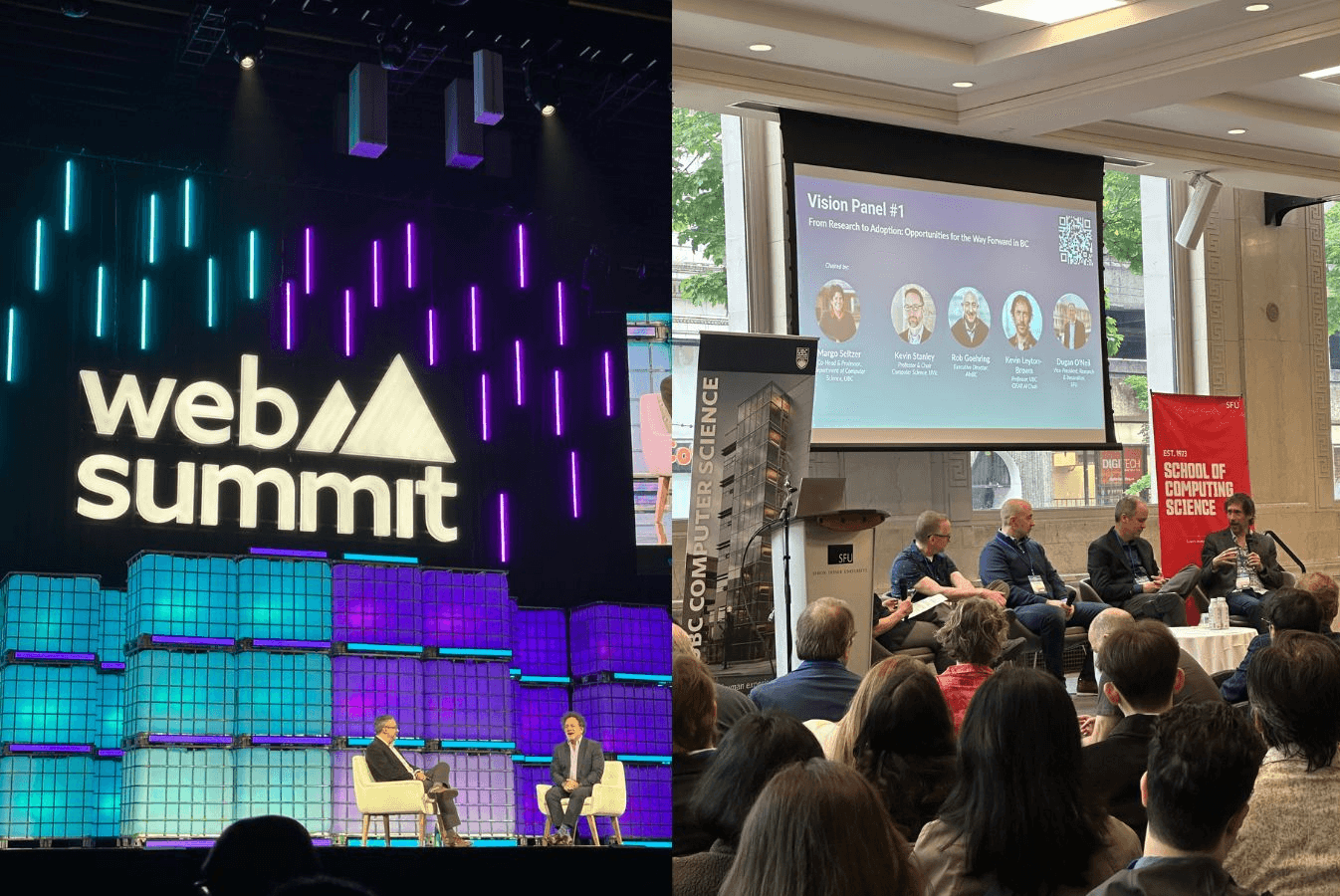
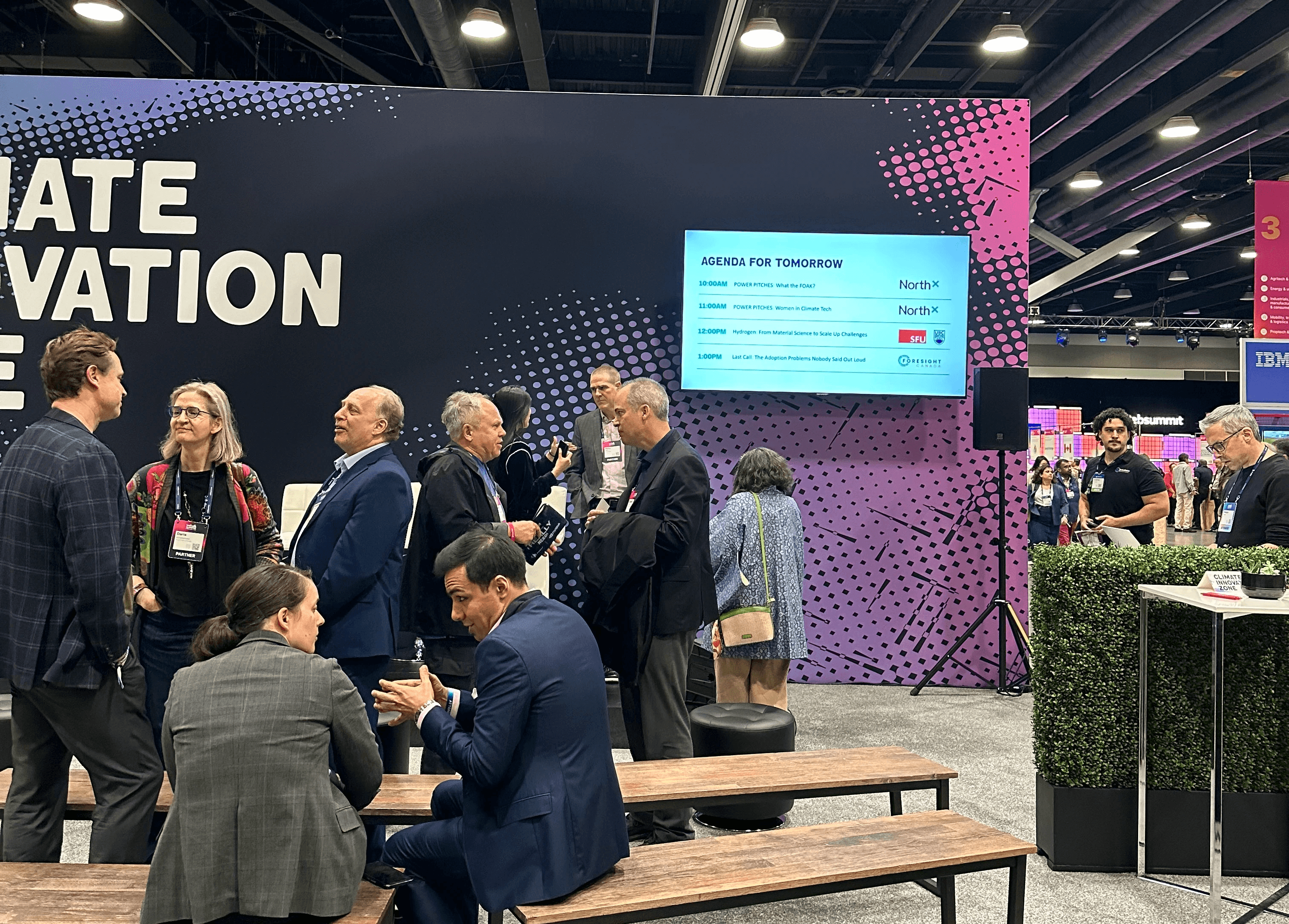
May was a busy month for Vancouver’s tech community. This recap covers two events in particular: the BC AI Research-to-Adoption Summit, which focused on the local ecosystem, and the Web Summit Vancouver, which drew a global audience. Both touched on the same defining question: where does the real competition in AI go next, and where does the opportunity lie?
BC AI Research-to-Adoption Summit 2026: From Lab to Real World
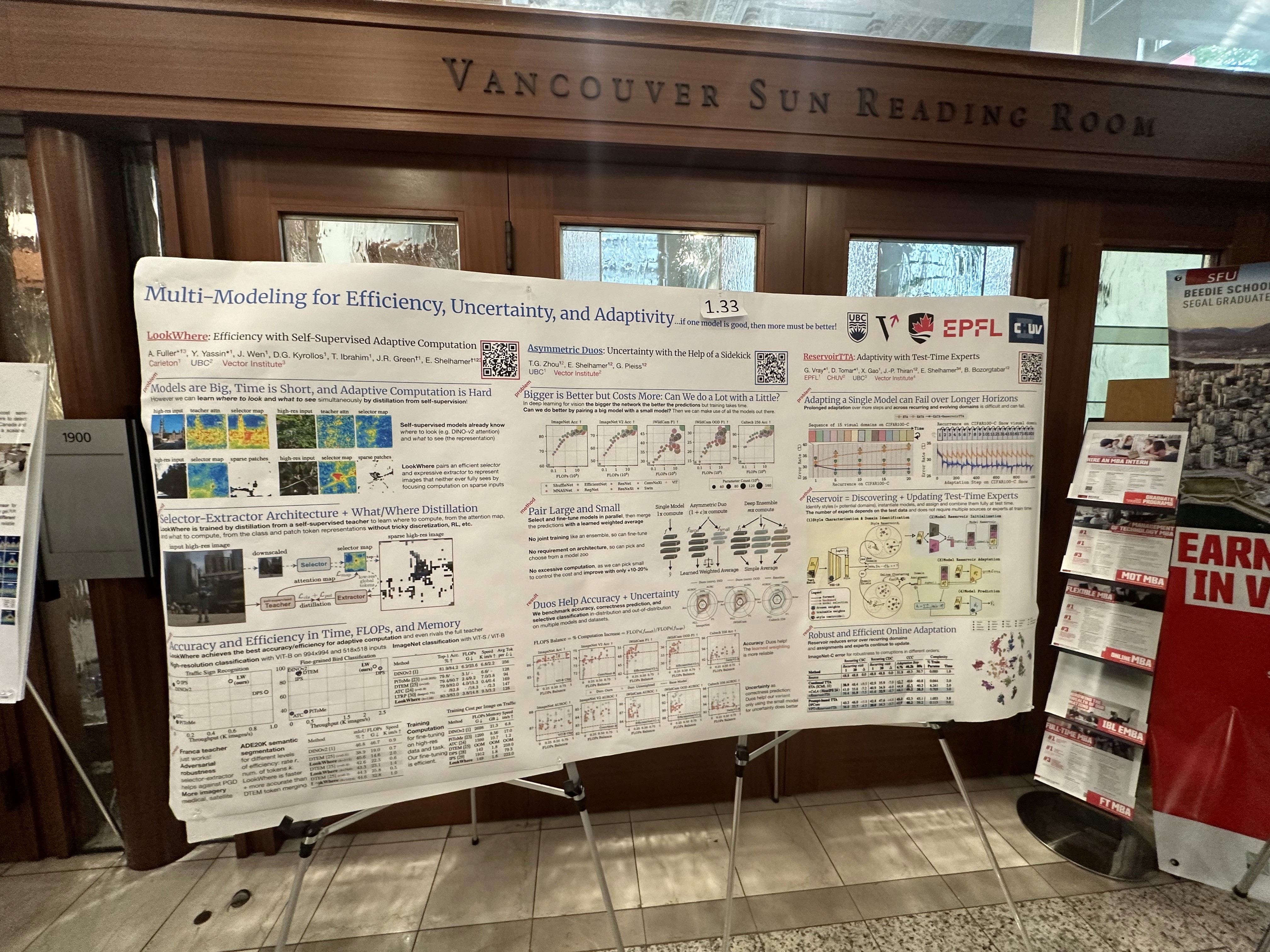
On May 7, 2026, over 200 leaders from academia, industry, and government gathered at SFU’s Segal Building in downtown Vancouver for the BC AI Research-to-Adoption Summit. Co-hosted by UBC and SFU, the event brought together researchers, policymakers, startup founders, and enterprise executives around a single question: British Columbia has world-class AI research — so why is adoption still lagging, and what does it take to close that gap?
Some Takeaways
1. Canada’s AI advantage is in research. The gap is in commercialization.
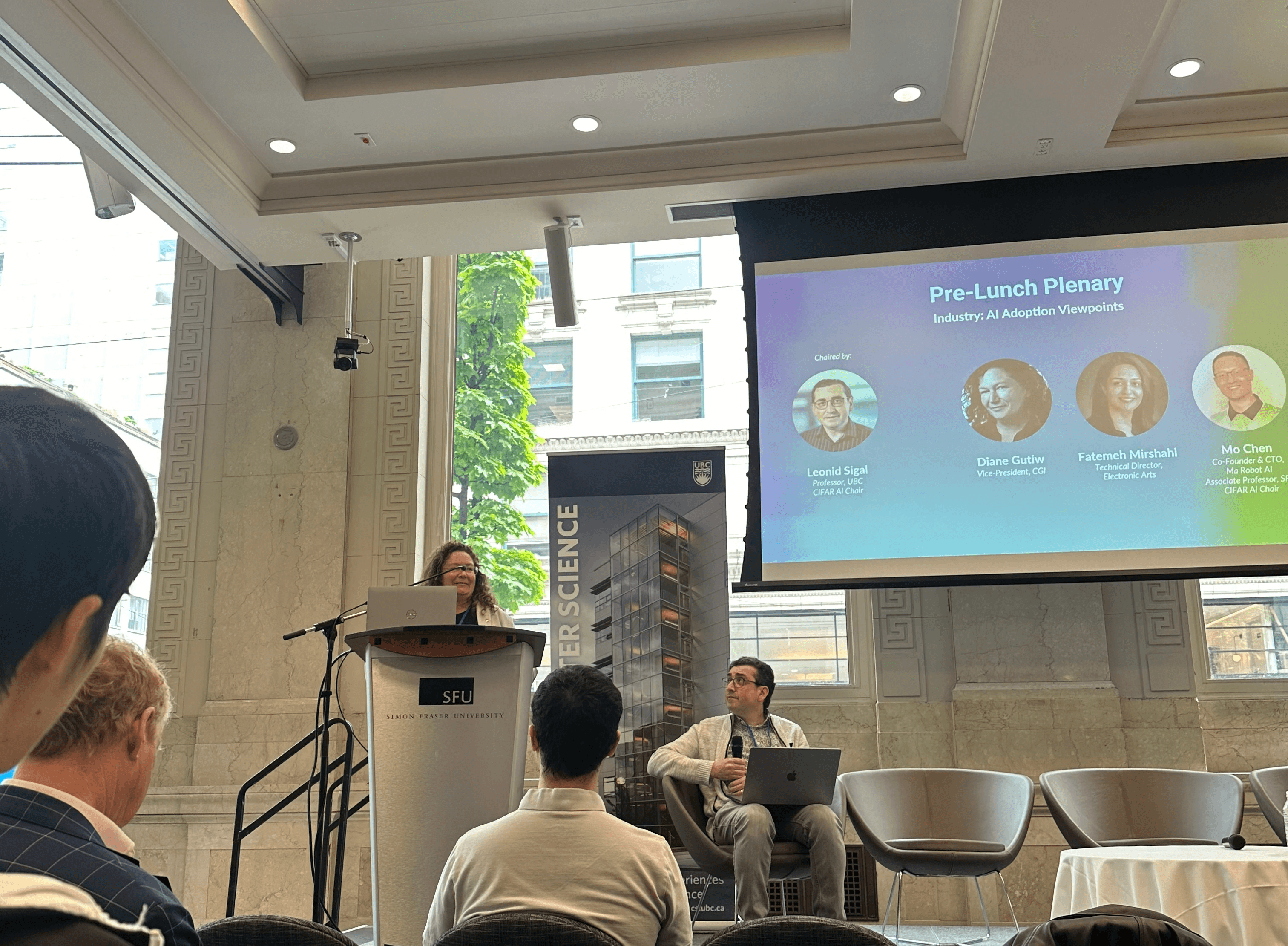
Diane Gutiw, Vice President at CGI and federal AI strategy advisor, drew on interviews with 110 representatives from academia, government, and the private sector to make the point clearly. Canada is home to globally renowned AI research institutions and continues to attract top talent from around the world. Yet translating that research leadership into commercial scale remains a persistent structural challenge. Startups with strong IP are being acquired by or relocating to the US, Germany, and the UAE — not because the ideas fall short, but because funding pathways, procurement models, and policy frameworks have not kept pace with the rate of innovation.
2. The real bottleneck in AI adoption is culture.
Across government and healthcare, the default posture toward AI remains risk management first, innovation second. That caution is not without reason — these institutions hold sensitive data and carry significant public responsibility. But when being careful becomes a reason to do nothing, the cost of missed opportunity starts to outweigh the cost of risk. The path forward lies in building guardrails that enable rather than restrict, alongside genuine investment in AI literacy at every level of an organization.
3. AI literacy needs to reach managers and decision-makers.
Training end users on a tool is not enough. The people who set policy, manage teams, and sign off on deployments need to understand what these systems can and cannot do, and who is accountable when something goes wrong. Diane shared a telling example from UVic’s law school: the shift from banning AI tools entirely, to requiring students to use them for policy analysis and then bring the outputs back to class for critical peer review. That progression is what meaningful AI literacy education looks like in practice.
4. Giving organizations permission to be efficient is itself a strategic decision.
When AI compresses a two-day task into twenty minutes, many professionals feel an instinctive unease. The answer is to address that directly through clear usage policies and responsible AI frameworks, rather than leaving people to navigate the ambiguity on their own. CGI’s internal responsible use agreement is one example of this approach in action: clear boundaries gave employees the confidence to innovate, rather than holding them back.
5. The complexity of real-world environments is where AI deployment gets hard.
Mo Chen, Associate Professor at SFU and Co-Founder of Ma Robot AI, offered a concrete illustration of this challenge. Robots perform reliably in warehouses and factories, but deploying them in hospital corridors is an entirely different problem. Clinicians rushing to emergencies, patients rising unexpectedly from wheelchairs, constantly shifting foot traffic — these environments demand genuine social intelligence, the ability to read human intent and respond naturally. His pilot project at Royal Columbia Hospital is testing this in practice, currently focused on lab sample delivery, with plans to expand into pharmaceutical delivery and operating room supply management.
6. Start with the problem, not the technology.
The most durable AI applications begin with a real and pressing need — in healthcare, housing, public services, resource management — rather than with a search for problems to match a technology to. BC has no shortage of problems worth solving, and this summit made a compelling case that the province also has the research talent, institutional infrastructure, and cross-sector willingness to act on them. What comes next depends on coordination and the will to follow through.
Web Summit Vancouver 2026: The New Battleground for the AI Era
This May, the global tech world turned its eyes to Vancouver once again. Now in its second consecutive year in Canada, Web Summit brought together over 20,000 attendees from 100+ countries. Beyond the networking and deal-making, this year’s event captured something more significant: a candid conversation about who gets to shape the future of AI, and how.
Open Source vs. Closed Source: A Trillion-Dollar Bet
Web Summit CEO Paddy Cosgrave opened the night by naming the defining tension of our era head-on.
On one side sits over $1 trillion poured into a handful of American closed-source AI companies, betting that a small number of firms will own the world’s AI infrastructure. On the other side, Chinese-led open-source models are freely available to anyone, consistently topping global benchmarks.
Nobody knows how this plays out. But one thing is already clear: the power structure of AI is being rewritten in real time.

Canada Bets Big on Sovereign AI
As Canada’s first-ever Minister of AI and Digital Innovation, Evan Solomon took the stage with a clear message: Canada is not watching from the sidelines.
He announced a series of major national commitments:
Over $2.4 billion CAD invested in domestic sovereign AI supercomputing infrastructure
A new AI supercomputer currently in procurement, expected to rank top 10–15 globally, with a budget of approximately $1 billion CAD
A $1.6 billion CAD talent attraction strategy, the largest in the G7, targeting 1,000 top researchers and their labs to relocate to Canada
Canada’s competitive advantages are substantial. The country is home to three world-class national AI institutes led by Turing Award winners: Yoshua Bengio at Mila in Montreal, Jeff Hinton at Vector Institute in Toronto, and Rich Sutton at Amii in Alberta. Waterloo graduates more engineers per year than Stanford. And Canada holds a unique global position in photonic chip manufacturing, with the only end-to-end photonic fabrication lab in North America.
Solomon was direct about what sovereignty actually means in practice:
“Sovereignty does not mean solitude. It means resilience and optionality.”
A Transatlantic Alliance Takes Shape
One of the biggest announcements of the week was the merger between Canadian AI company Cohere and Germany’s Aleph Alpha, creating a transatlantic sovereign AI powerhouse.
For countries looking for credible AI infrastructure outside the US-China duopoly, this deal signals something important. Cohere’s Chief AI Officer Joelle Pineau noted that demand from European enterprises and governments has been “incredibly positive,” with customers seeking models where they understand exactly where their data goes, how it is used, and where inference happens.
The combined entity maintains Canadian headquarters, Canadian IP, and Canadian innovation alongside a German base, offering a model that other sovereign-minded nations can build on. The deal has already generated significant attention ahead of the G7 Tech Ministers meeting in Paris.
Vancouver and BC: The Numbers Behind the Momentum
The provincial and city representatives made a compelling case for why Vancouver is emerging as a serious global tech hub.
British Columbia:
Home to more than 12,000 technology firms and approximately 180,000 tech workers
Houses two of Canada’s five supercomputing sites
Positioned as the Asia-Pacific gateway for North America
Vancouver:
Nearly 100,000 tech workers, with one of the fastest-growing talent pipelines on the continent
More than $30 billion CAD invested in Metro Vancouver tech companies over the past five years
A growing portfolio of globally scaled companies across life sciences, clean tech, quantum, and AI
BC Finance Minister Brenda Bailey framed it well: Web Summit is not just a conference for Vancouver. It is a platform for BC’s technology companies to attract global investment, find international partners, and establish themselves on the world stage.
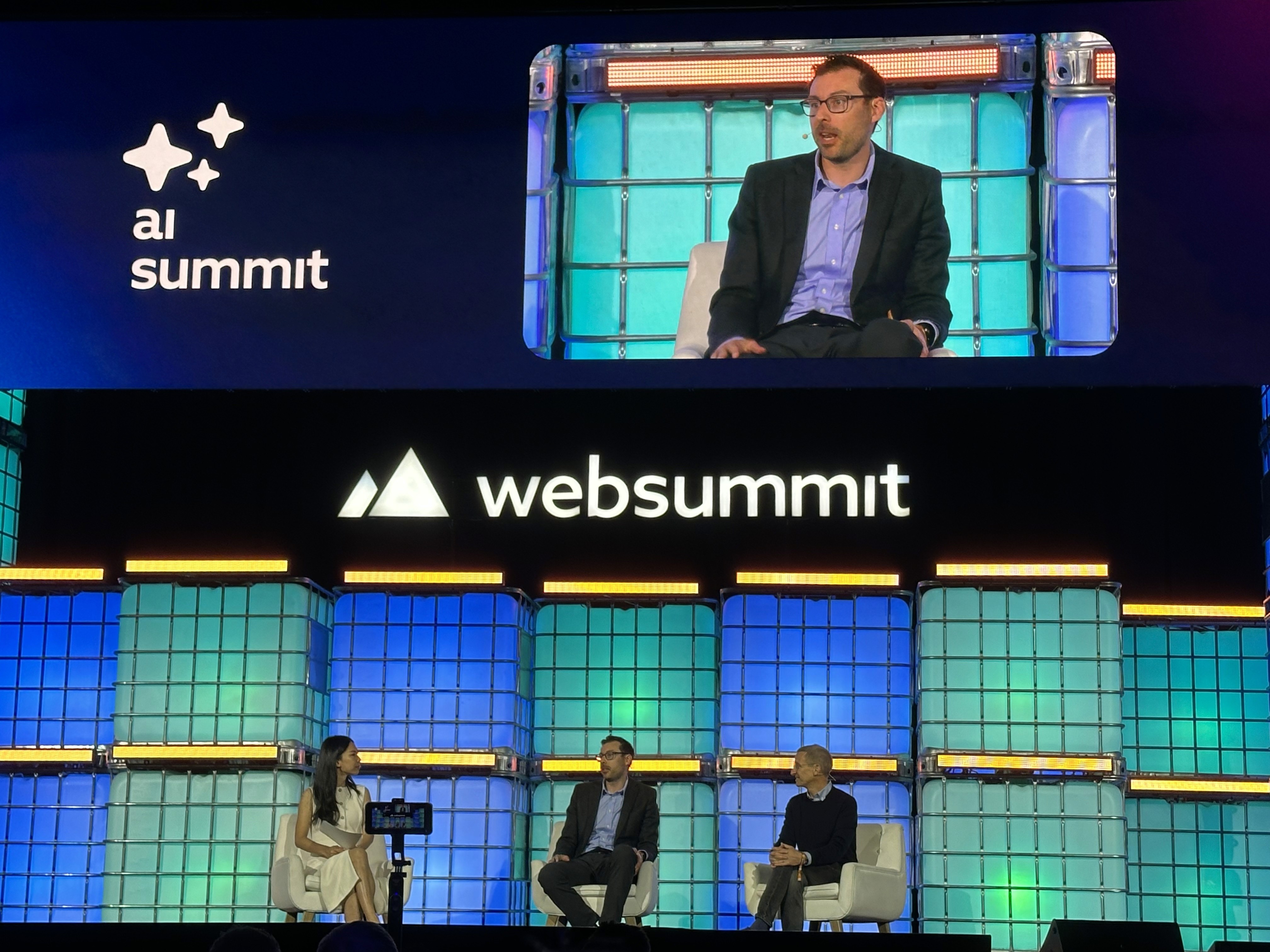
Some Takeaways
1. Sovereign AI is the next geopolitical frontier
It is not just Canada. Europe, Southeast Asia, and the Middle East are all racing to build their own AI infrastructure. Whoever can offer a trustworthy alternative outside the US-China duopoly will hold significant leverage in the next wave of global tech partnerships.
2. The real barrier to enterprise AI adoption is cost control
When scaling from a pilot of 50 users to 30,000 or 100,000 employees, the most powerful model is rarely the most practical one. Performance-to-cost ratio, on-premise deployment options, and auditability are what enterprise customers are actually prioritizing.
3. Talent retention is a national strategy, not just an HR problem
Canada’s$1.6 billion talent attraction plan reflects a broader recognition that brain drain is a structural risk. Competitive tax rates, stable social infrastructure, and proximity to global markets are becoming as important as research funding in keeping top talent home.
4. Software value is moving up the stack
Code is getting cheaper across the board. The defensible assets going forward are ecosystem depth, data advantages, user trust, and the ability to continuously iterate. For anyone building software products today, this shift is worth paying close attention to.
5. Vancouver is no longer just a stand-in
As co-host Casey Laauo put it: people often ask whether Vancouver can become the next San Francisco or Shenzhen. The more interesting answer is that it does not need to. It has its own strengths in hard tech, quantum, and clean tech, and it is building a distinct identity on the global stage.